AI Application Health Check

Helping founders identify issues before submission and reducing manual review effort

Ai
B2B
UX Design
SaaS
Legal Tech
Overview

SEIS/EIS Advance Assurance applications require founders to provide detailed company, investor and fundraising information before submission to HMRC.

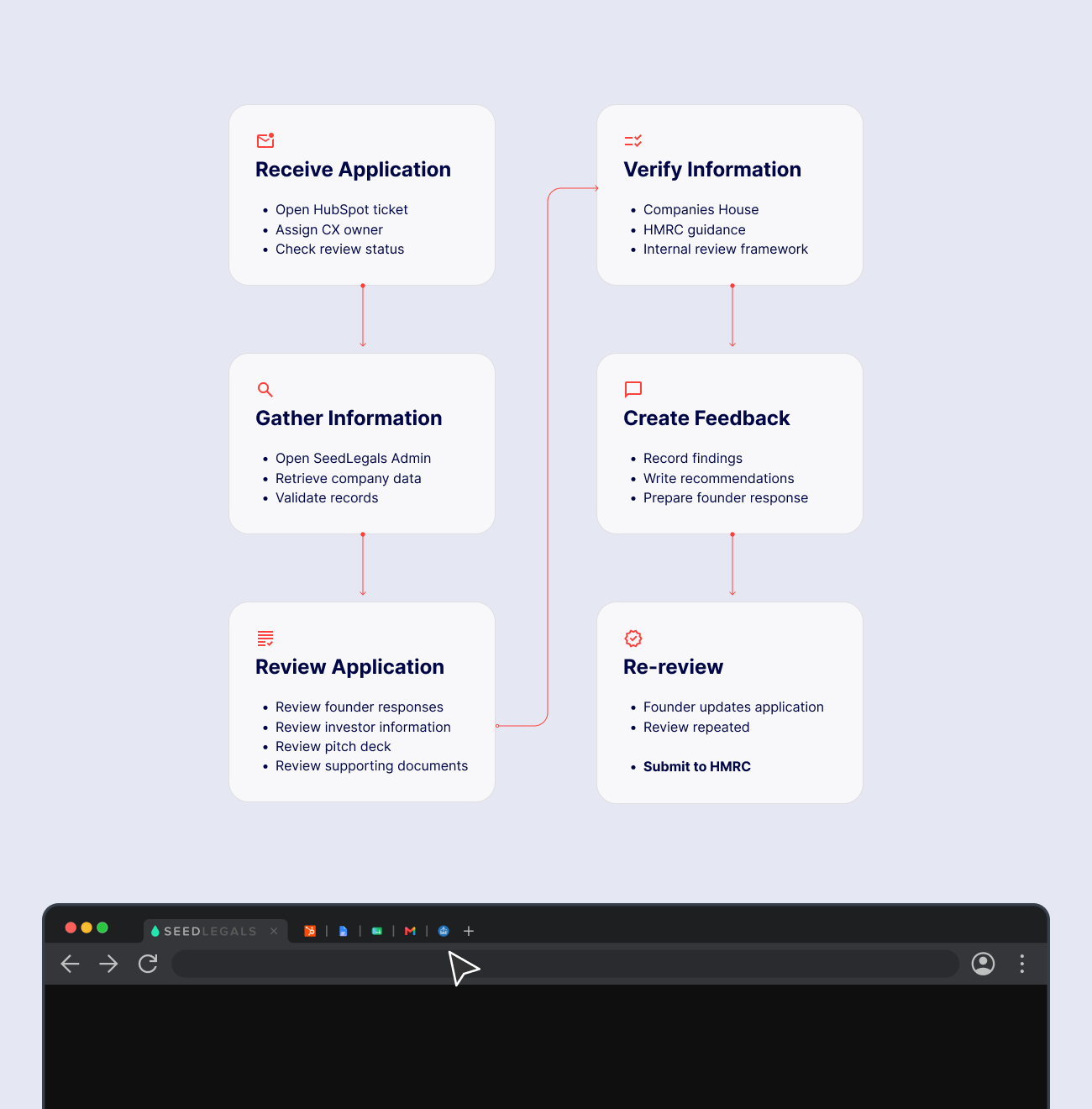
Before this project, every application went through a manual review process conducted by the Customer Experience (CX) team. Reviews involved navigating multiple tools, verifying information across different sources and compiling detailed feedback for founders.

I worked with Product, Engineering and CX teams to design an AI-assisted review experience that helped founders identify and fix issues before submitting their application.

My Role

Product Designer

Timeline

Aug 2025 – Oct 2025

Responsibilities

  • Discovery and workflow mapping
  • Design exploration
  • User flows
  • Information architecture
  • Interaction design
  • Stakeholder collaboration
  • Internal testing and iteration

Impact

  • Reduced application review time from approximately 3 days to 0.5 day
  • Reduced repetitive manual review effort
  • Helped founders improve applications submission
  • Founders frequently ran the review multiple times before submitting
The Problem

A review process spread across multiple tools

The CX team reviewed every Advance Assurance application manually.

To complete a review they moved between:

  • HubSpot
  • Internal SeedLegals admin tools
  • Review spreadsheets
  • Founder applications
  • Review documents
  • Companies House records

Each review contained more than 50 validation checks covering company information, fundraising details, investor information, pitch decks and compliance requirements.

As application volume increased, the review process became increasingly repetitive and difficult to scale.

Key Challenges

  • Repeated founder mistakes across applications
  • Significant context switching between systems
  • Time spent compiling feedback manually
  • Multiple review cycles before submission

Understanding the review process

6+ Tools

  • HubSpot
  • Admin Tool
  • Review Sheet
  • Application
  • Companies House
  • Review Doc

50+ Checks

  • Company
  • Investors
  • Pitch Deck
  • Funding
  • Cap Table
  • Compliance

Multiple Review Cycle

  • Review
  • Feedback
  • Update
  • Re-review
Discovery

Understanding how reviews were performed

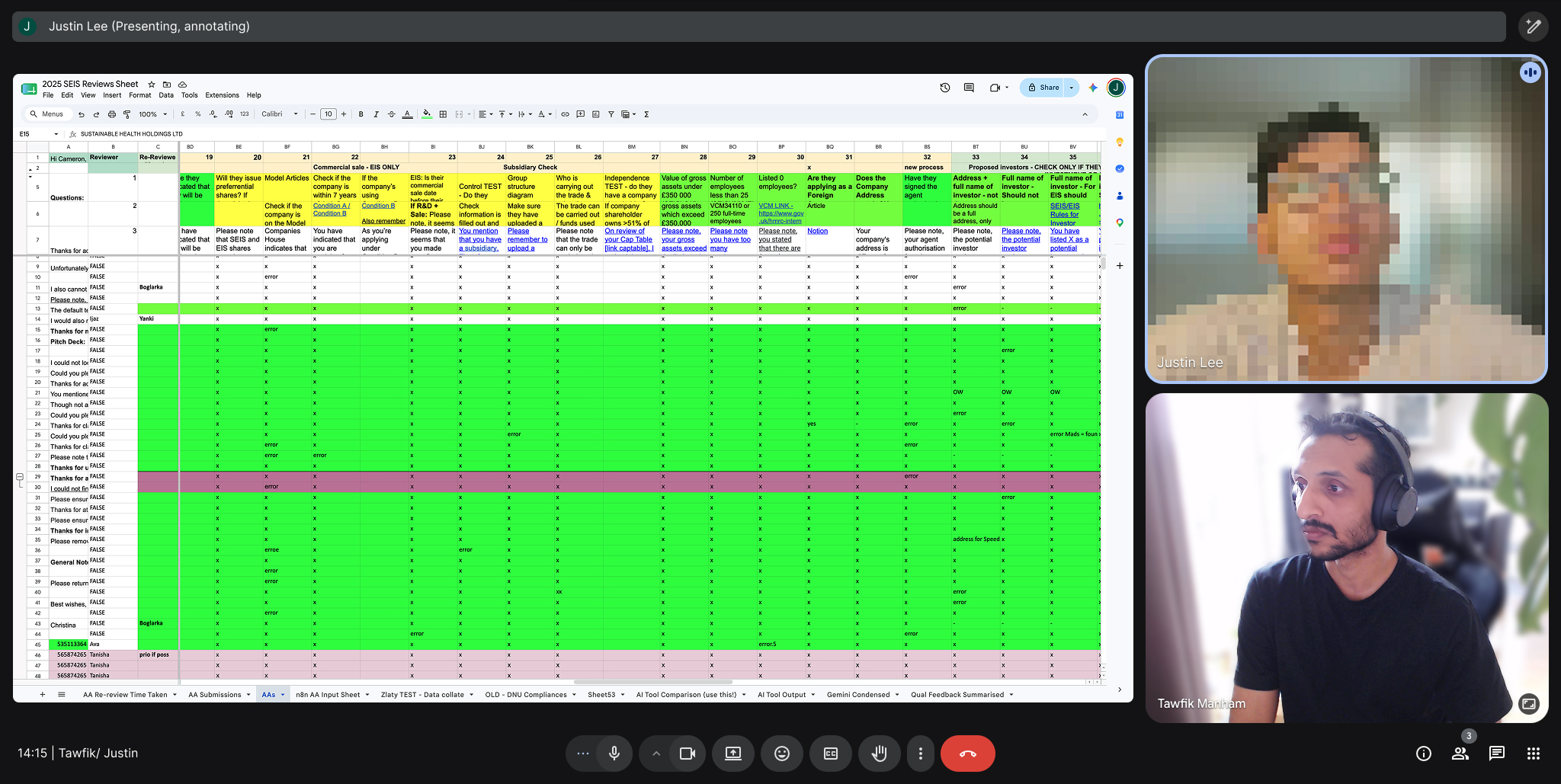
I worked closely with CX specialists to understand how applications were reviewed.

Through conversations and workflow analysis, I mapped the review process and identified where time was being spent.

One important observation emerged:

Many review decisions followed a repeatable framework.

The team already maintained a structured review process with documented checks and guidance. While the review itself was manual, many issues were predictable and repeatedly surfaced across applications.

This raised an opportunity

Could founders identify and fix common issues before a human review was required?

Interview session with a CX specialist to understand how Advance Assurance reviews were conducted and where time was being spent.

Goal

Defining the Opportunity

The goal was not to replace human review.

The goal was to help founders submit stronger applications before reaching the CX team.

This would:

  • Reduce avoidable review cycles
  • Improve submission quality
  • Reduce manual effort
  • Create a better founder experience
Ideation

Exploring Solutions

We explored several approaches before deciding on a final direction.

Option 1

Continuous AI Reviewing

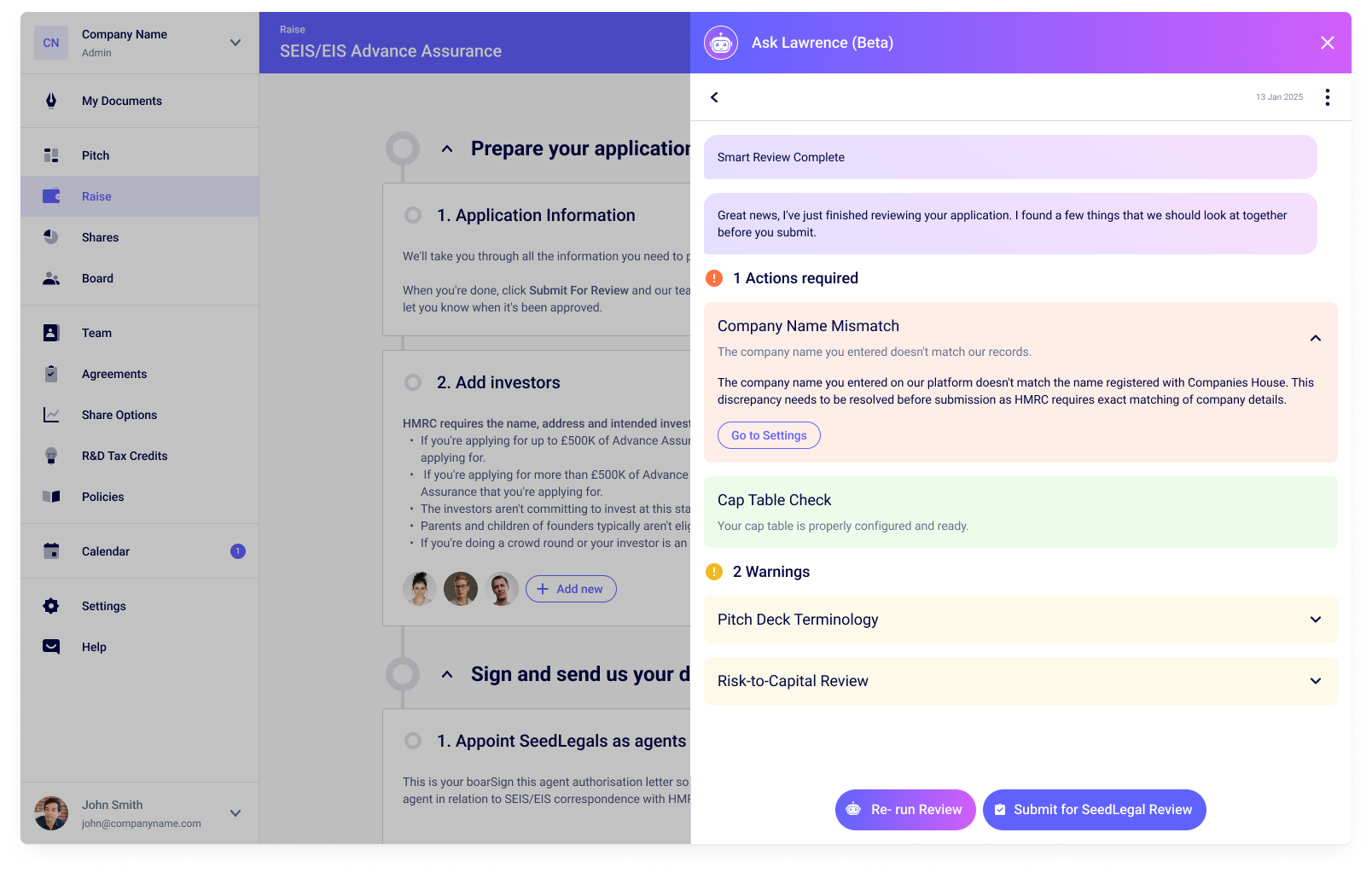
An always-on review experience that continuously analysed application data while founders completed forms.

Option 1: Continuous Ai Review

Pros

  • Immediate feedback
  • Highly proactive

Cons

  • Information overload
  • High token consumption
  • Significant implementation complexity
Option 2

Chat-Based AI Review

A conversational experience allowing founders to discuss application issues with an AI assistant.

Option 2: Chat-based Ai review

Pros

  • Flexible interaction
  • Familiar chat experience

Cons

  • Greater engineering effort
  • Risk of founders misunderstanding guidance
  • More difficult to control information quality
Option 3

AI Health Check

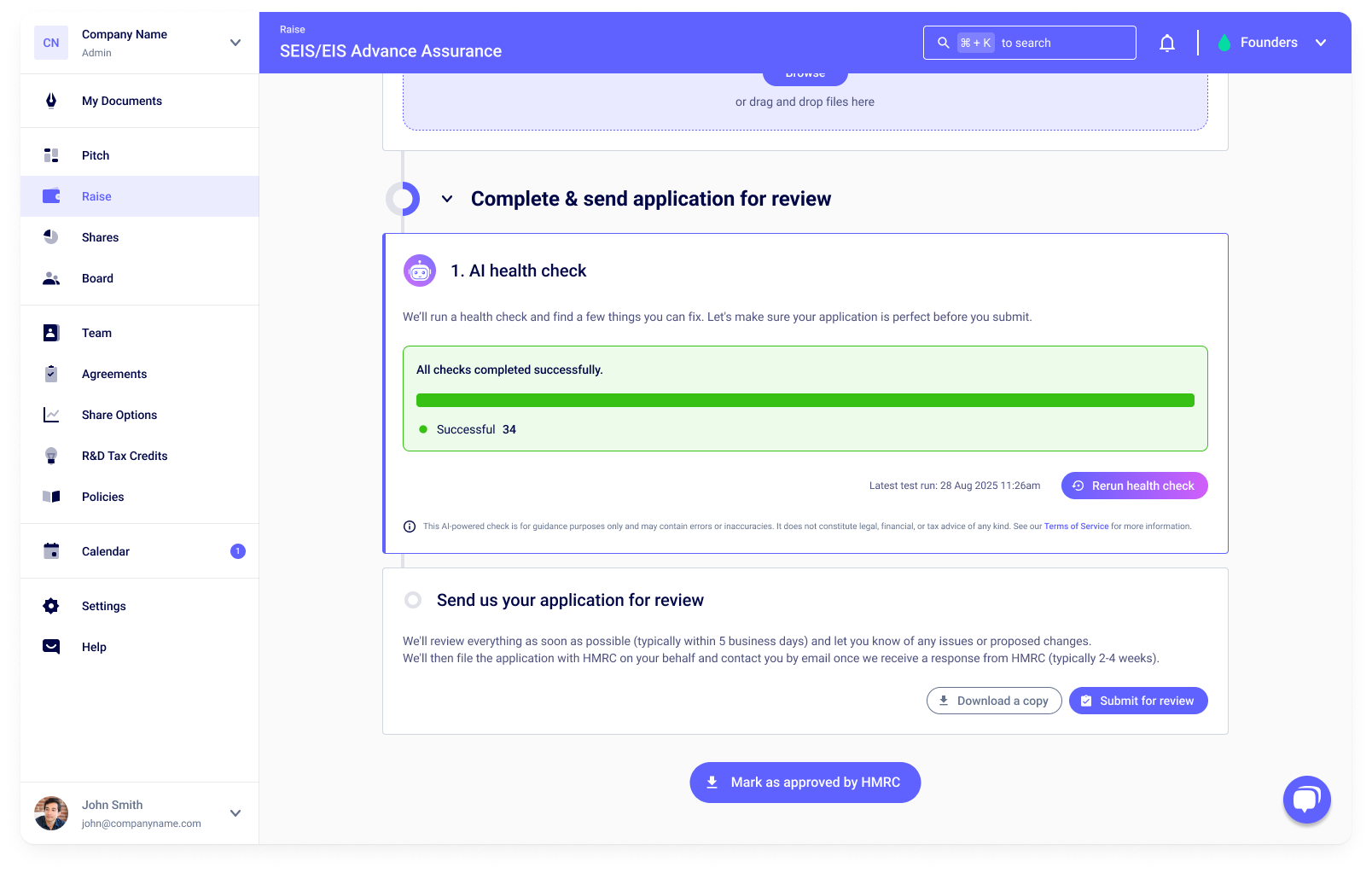
A focused review checkpoint before submission.

Founders could run a review, receive actionable feedback and re-run the check after making improvements.

Option 3: Ai health check

Why this approach won

  • Faster to deliver
  • Lower implementation risk
  • Easier to understand
  • Clear feedback loop
  • Strong MVP foundation
Design Challenges

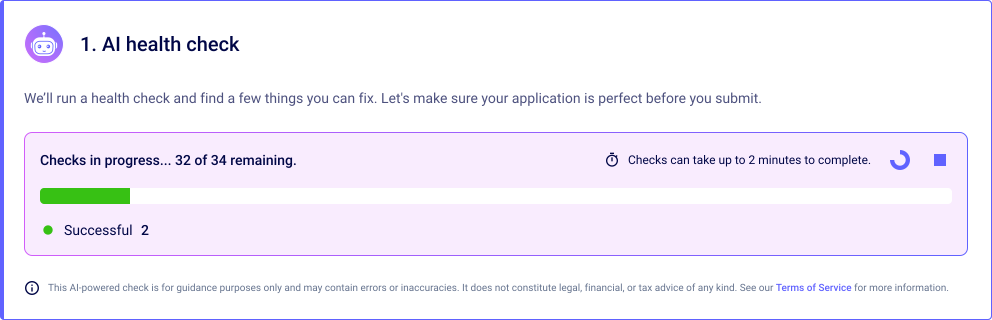
Designing for Waiting

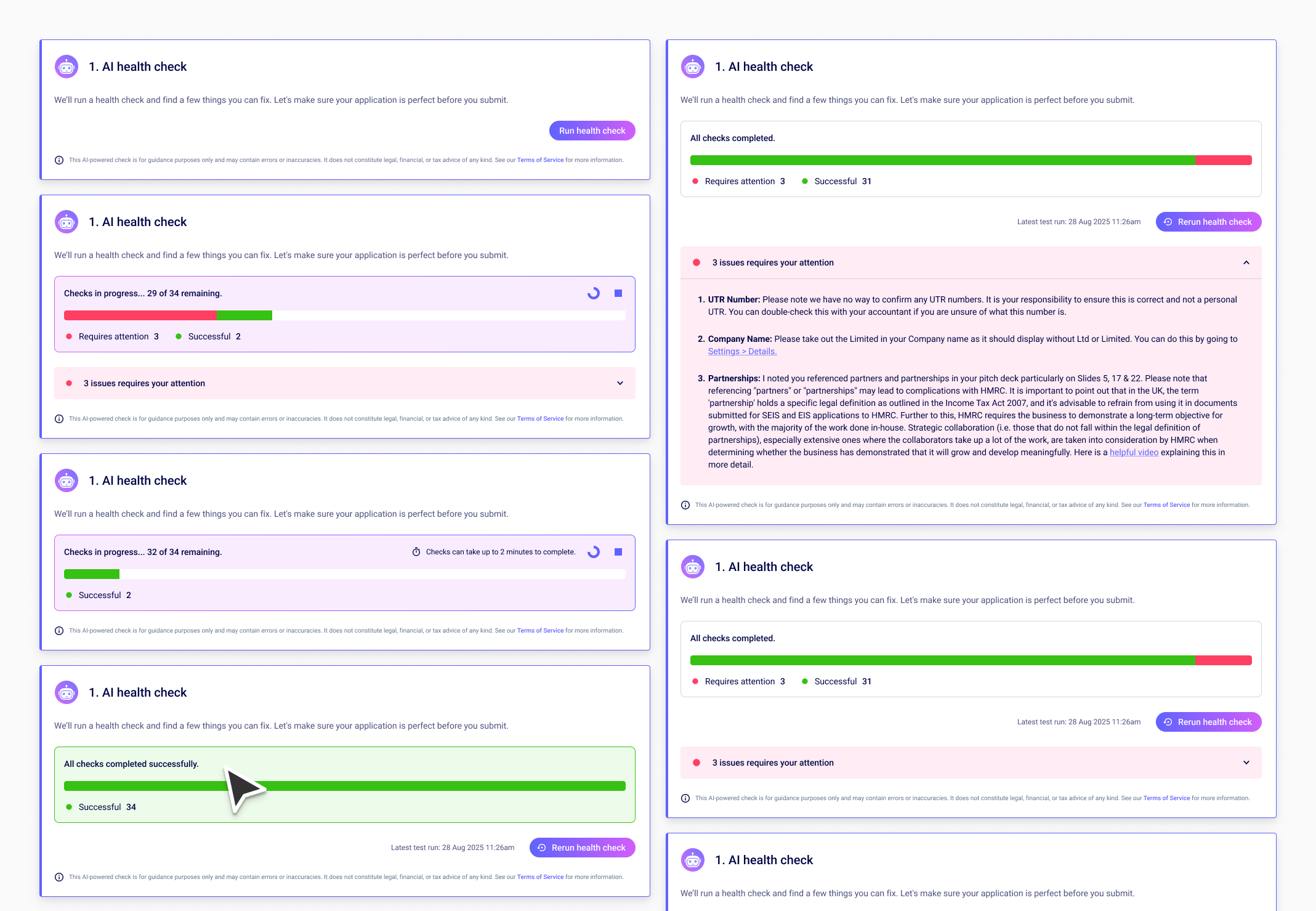
Unlike traditional validation, the review process was not instant.

I explored:

  • Progress indicators
  • Completion states
  • Re-run behaviours
  • Expectations around processing time

The goal was to make the system feel transparent while maintaining trust.

Communicating Confidence

Founders needed to quickly understand which issues required attention.

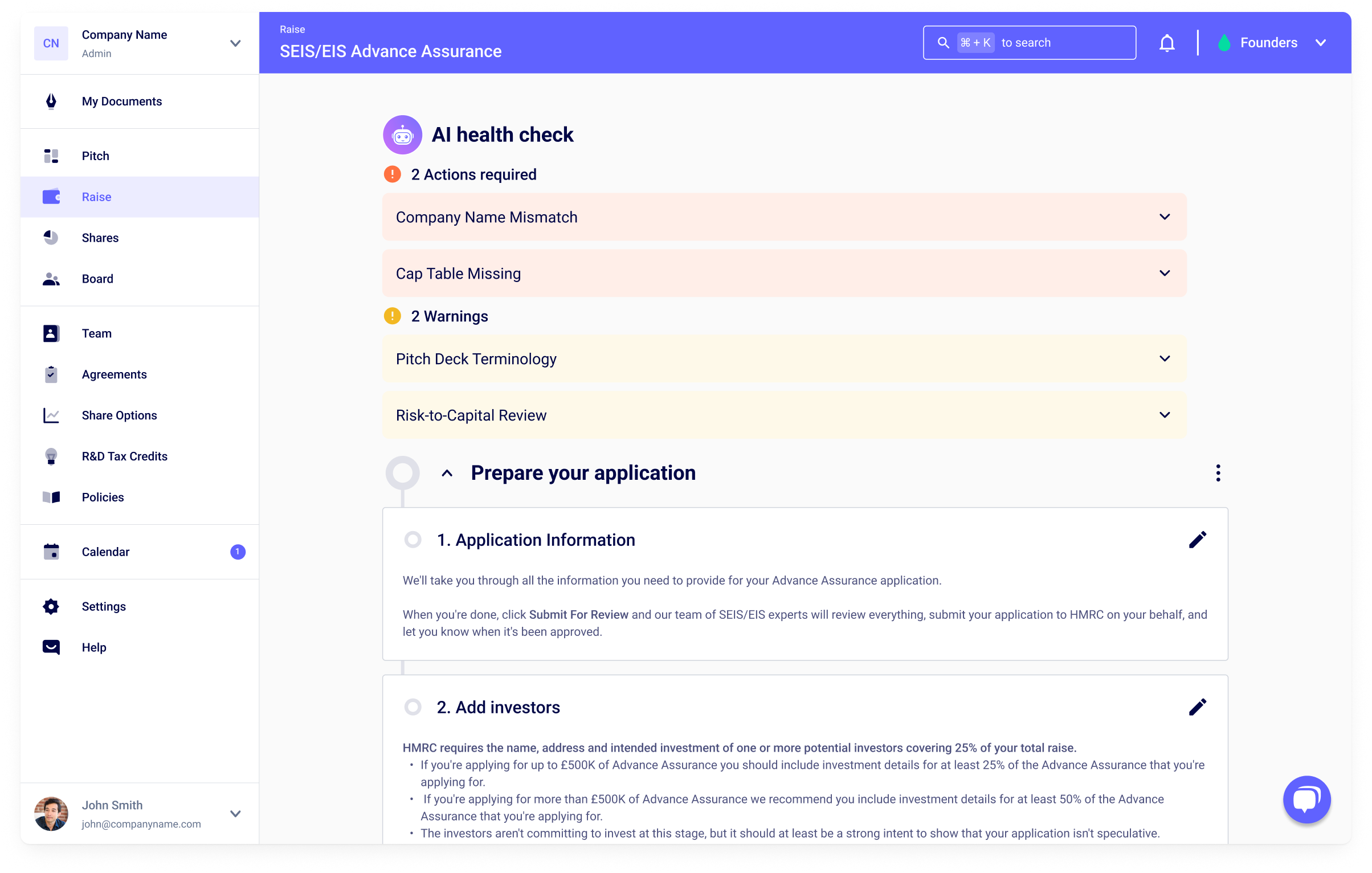
I designed a simple review hierarchy:

  • Green = Passed
  • Amber = Warning
  • Red = Action Required

This allowed users to prioritise issues without needing to understand the underlying review logic.

AI States 2

Reducing Information Overload

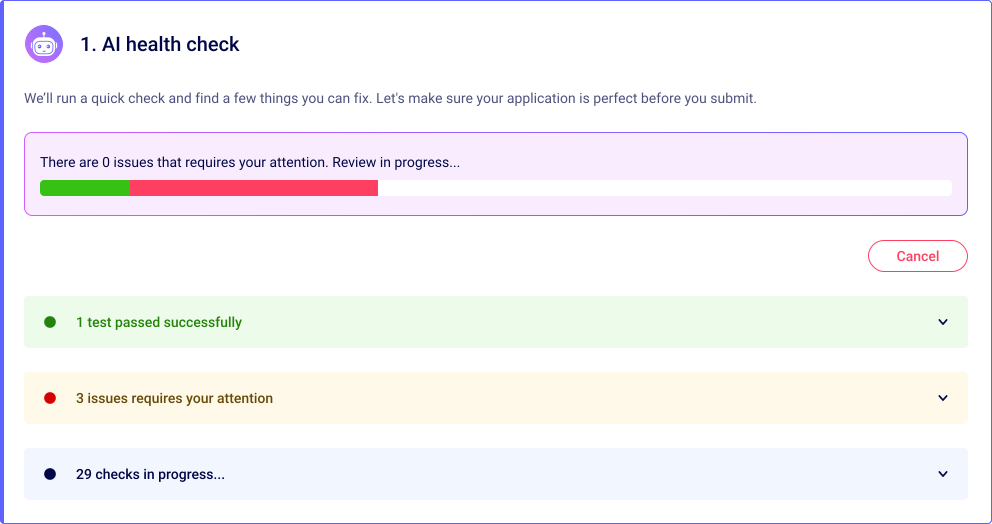
Early concepts exposed all review results.

During testing we found that displaying every successful check created noise and distracted founders from the issues that mattered.

The final experience focused on surfacing actionable feedback while hiding unnecessary information.

This reduced cognitive load and kept the review focused.

Ai Waiting

Final Solution

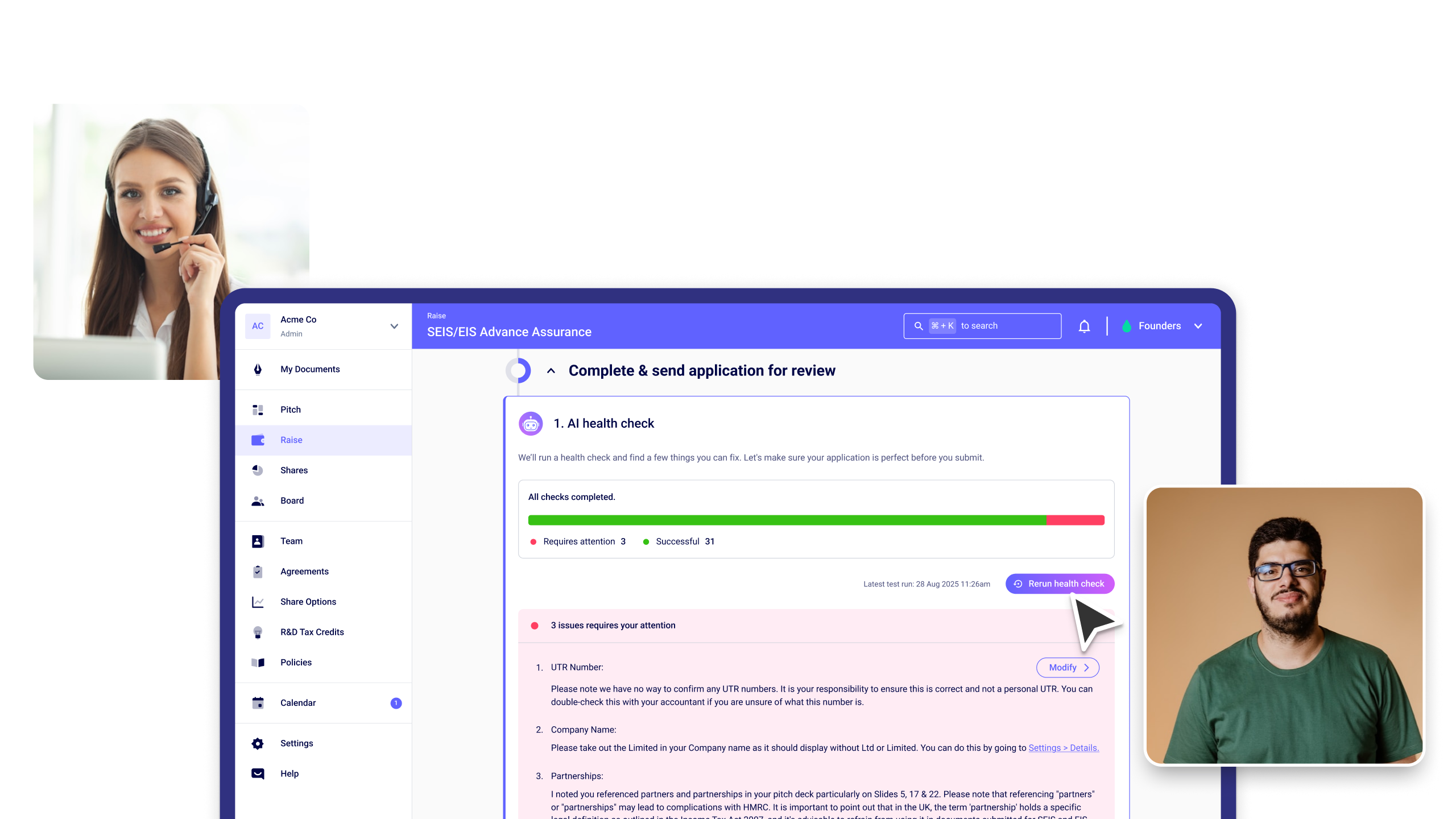
The final AI Health Check was integrated directly into the application journey.

Founders could:

  1. Run a review
  2. Receive actionable feedback
  3. Resolve issues
  4. Re-run the review
  5. Submit with greater confidence

The experience transformed a complex internal review process into a simple founder-facing workflow.

Try out the interactions here

Outcomes

  • Review time reduced from approximately 3 days to 0.5 day
  • Founders commonly ran reviews multiple times before submitting
  • Reduced repetitive manual checks
  • Improved application quality before review
  • Faster progression through the submission journey

Impact

The AI Health Check became a self-service review step before submission.

0 %
Reduction in evaluation time
0 %
Reduction in errors before final submission

Reflection

This project taught me that successful AI products are often less about AI and more about workflow design.

The most valuable insight was recognising that the CX team already had a repeatable review framework. The challenge was not creating intelligence from scratch, but translating expert knowledge into a simple experience that founders could use confidently.

If I were continuing the project, I would explore:

  • Conversational AI assistance
  • Smarter recommendation prioritisation
  • Richer review analytics
  • Personalised guidance based on application history